PCOS Is Now PMOS: Why the Name Change Matters for Women’s Health

If you’ve ever sat in a doctor’s office trying to explain that yes, you have PCOS, no, you don’t necessarily have cysts, and yes, it affects far more than just your ovaries , congratulations. You’ve probably spent years educating people about your condition.
You can finally retire from that role.
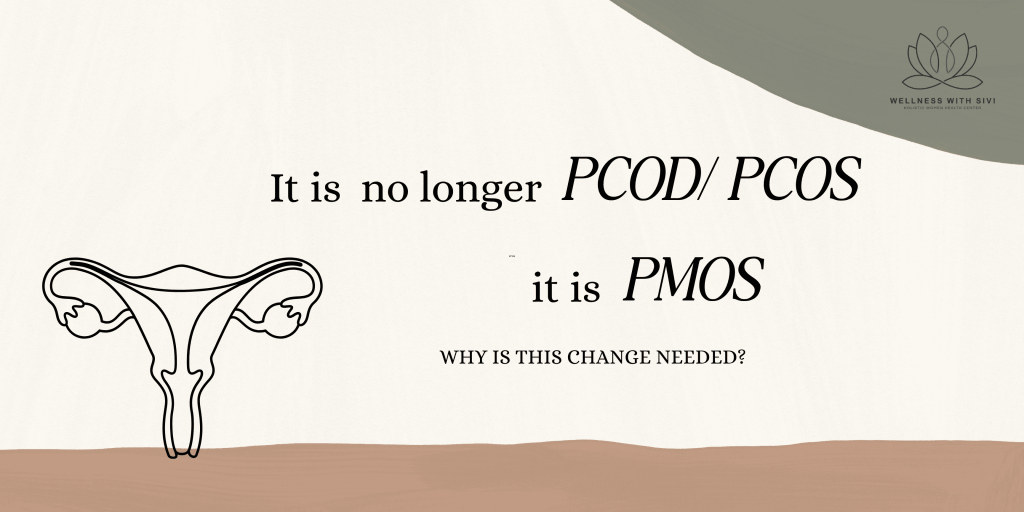
The condition formerly known as Polycystic Ovary Syndrome (PCOS) now has a new name: Polyendocrine Metabolic Ovarian Syndrome (PMOS).
It’s only a few letters different, but it represents a major shift in how we understand the condition.
Why The Name Change?
The short answer? Because the old name didn’t tell the whole story.
Many women diagnosed with PCOS do not actually have ovarian cysts. At the same time, the name failed to capture the broader hormonal and metabolic disturbances that are often at the heart of the condition.
For years, the focus remained on the ovaries, while many women were struggling with symptoms affecting their skin, hair, metabolism, mood, energy levels, fertility, and overall health.
The new name reflects what practitioners and many women have known for a long time this is not simply an ovarian condition.
PMOS stands for:
Poly – many Endocrine – involving hormones Metabolic – involving metabolism and insulin regulation Ovarian – involving ovarian function
The new terminology better reflects the whole-body nature of the condition.
What PMOS Actually Involves
PMOS affects approximately 10–15% of women of reproductive age and can influence multiple systems throughout the body.
Hormonal (Endocrine) Changes
Many women experience elevated androgen levels, including testosterone.
This can contribute to:
• Acne
• Excess facial or body hair growth (hirsutism)
• Hair thinning or hair loss
• Oily skin
Metabolic Changes
One of the most common features of PMOS is insulin resistance.
This can make:
• Weight management more challenging
• Cravings more intense
• Energy levels less stable
• Blood sugar regulation more difficult
Over time, insulin resistance may increase the risk of developing type 2 diabetes and cardiovascular disease.
Ovarian and Reproductive Changes
Women may experience:
• Irregular periods
• Delayed ovulation
• Missed cycles
• Fertility challenges
• Ovarian cysts in some cases
It’s important to remember that cysts may be present, but they are no longer considered the defining feature of the condition.
The Emotional and Stress Connection
This is where I would like to add my perspective as both a practitioner and someone who has personally experienced this condition. Over the years, I’ve noticed certain emotional patterns appearing repeatedly among women struggling with PMOS.
Many are highly driven, ambitious, capable women who carry significant responsibility. They are often the ones holding everything together, pushing through challenges, and staying in control even when they are exhausted.
Many also share histories of:
• Chronic stress
• Feeling unsupported
• Having to become independent at a young age
• Fear of failure
• Perfectionism
• Constant comparison
• Feeling the need to prove themselves
- Childhood traumas that trigger the fear of survival
Research continues to explore the relationship between stress, hormones, metabolism, and the nervous system. While these emotional experiences may not directly cause PMOS, they can influence the body’s stress response and overall hormonal balance.
From a holistic perspective, healing often involves more than addressing food and supplements. It may also involve creating safety within the body, regulating the nervous system, processing emotions, and reducing chronic stress patterns.
Long-Term Health Considerations
PMOS is associated with increased risks of:
• Type 2 diabetes
• Cardiovascular disease
• Depression
• Anxiety
• Chronic inflammation
Which makes sense when your hormones, metabolism, and nervous system have been working overtime for years.
What About PCOD?
In India and many parts of Asia, the term PCOD (Polycystic Ovarian Disease) is commonly used.
The distinction between PCOD and PCOS has often created confusion, and many people use the terms interchangeably.
As international guidelines gradually transition toward PMOS, healthcare providers and educators will likely begin adopting the newer terminology over the coming years.
How Can You Support PMOS Naturally?
There is no single solution because every woman’s body is different.
However, most women benefit from focusing on:
• Blood sugar balance
• Adequate protein intake
• Regular movement
• Stress management
• Better sleep quality
• Nervous system regulation
• Emotional healing and self-awareness
• Addressing nutrient deficiencies
The goal isn’t simply to manage symptoms.
The goal is to create an environment where the body feels safe enough to restore balance.
Why This Name Change Matters
Names influence everything. They shape research priorities. They influence how healthcare professionals think. They affect how quickly women receive a diagnosis. They determine whether patients feel seen and understood.
The hope is that PMOS will:
• Reduce diagnostic delays
• Increase awareness of the metabolic aspects of the condition
• Encourage more comprehensive treatment approaches
• Shift the conversation toward whole-body health
• Support more research into long-term health outcomes
Most importantly, it acknowledges what many women & holistic world has been saying for years – This condition is about far more than ovarian cysts.
Final Thoughts
Calling something “Polycystic Ovary Syndrome” for decades when many women didn’t even have cysts was always a little misleading.
The shift to PMOS feels like a step toward a more complete understanding of what’s really happening in the body.
Same condition. Same community. A more accurate name.
And hopefully, a more holistic conversation moving forward.
Now if we could get the same energy for endometriosis research, that would be amazing.
— Sivi
Want To Understand Your Cycle Better?
If you’re ready to explore your hormonal health from both a physical and emotional perspective, these sessions may help:
Regularize Your Irregular Periods – Learn about menstrual cycles, nutrition, lifestyle support, and hormonal balance. Suitable for women with irregular cycles and PMOS.
Painless Periods- Designed for women experiencing painful, heavy, or clotty periods, including conditions such as endometriosis, adenomyosis, and estrogen-dominant patterns.
Chart Your Cycle –A practical tool to help you understand your menstrual cycle and identify patterns within your body.
Reclaim Your Cycle –Understand the hormonal shifts throughout the menstrual cycle and learn how to align your nutrition, work, exercise, and self-care with each phase.
Explore the courses at:
https://wellnesswithsivi.com/course/
Use the code PMOS to receive 10% off.


Responses